
Dental Anxiety in Lagos: How to Overcome Your Fear of the Dentist
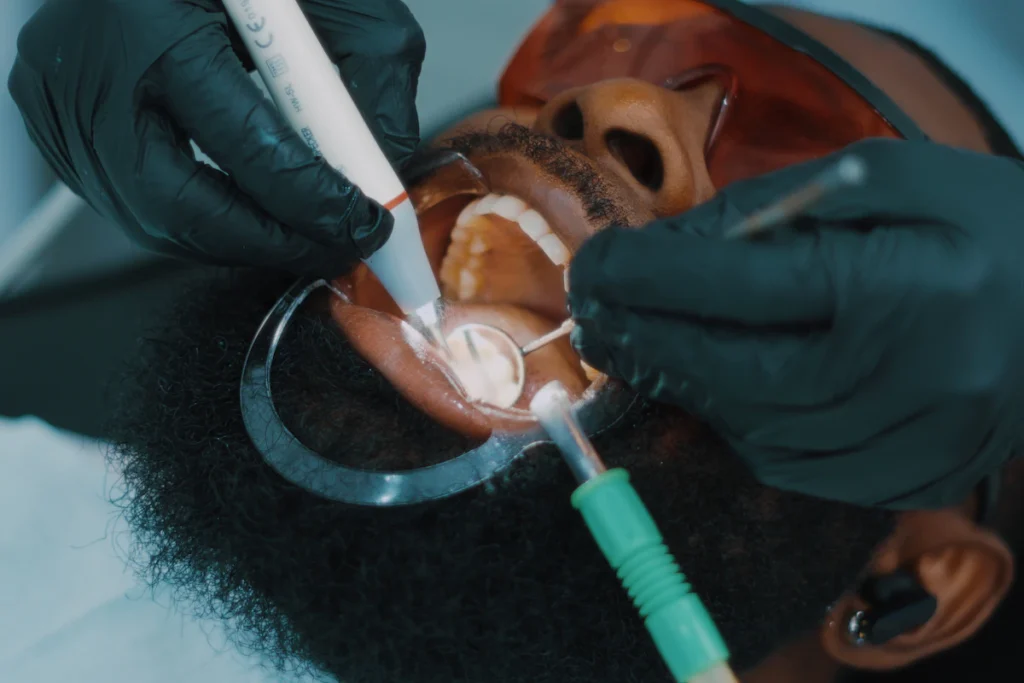
Dental anxiety in Lagos is far more common than most people admit. Studies show that up to 36% of people experience dental anxiety, and roughly 12% have dental phobia — a severe fear that prevents them from going to the dentist at all. If this is you, this guide is written specifically for you.

Dental anxiety is a genuine psychological response, not a character flaw. At Dovers Dental Clinic in Lekki, we see anxious patients every day and we know how to make your experience as calm and comfortable as possible.
What is Dental Anxiety? (And How It’s Different from Dental Phobia)
Dental anxiety is nervousness or apprehension about visiting the dentist. It’s normal to feel a little anxious before a dental procedure, just as you might feel nervous before any medical appointment. The feeling usually reduces once the procedure begins and you realise it’s manageable.
Dental phobia is much more severe. People with dental phobia experience intense, irrational fear that causes them to avoid the dentist entirely — sometimes for years or even decades — even when they are in significant pain. The thought of a dental appointment triggers panic attacks, racing heart, difficulty breathing, and extreme distress.
Both are valid experiences, and both are treatable. The key is finding a dental practice in Lagos that takes your anxiety seriously rather than dismissing it.
Common Causes of Dental Anxiety in Lagos
Understanding the root cause of your dental anxiety can help you address it. The most common causes include:
- Past traumatic dental experience — a painful or frightening procedure in childhood (often without adequate anaesthesia) that has left a lasting memory. This is unfortunately common in Nigeria where anaesthetic use has historically been inconsistent.
- Fear of pain — the belief that dental procedures will hurt. Modern dentistry is dramatically less painful than it was 20 years ago, but many Nigerians base their expectations on old experiences or stories from family and friends.
- Fear of needles — specifically the injection used to deliver local anaesthetic. Interestingly, the injection is often the only moment of discomfort in an entire procedure.
- Fear of gagging — some people have very sensitive gag reflexes that make dental examinations and impressions uncomfortable.
- Loss of control — being unable to see what’s happening, lying in a vulnerable position, not knowing when the procedure will end. Many anxious patients describe a feeling of helplessness in the dental chair.
- Embarrassment or shame — worry about being judged for the state of their teeth, especially if they’ve avoided the dentist for many years. Many Lagosians say embarrassment keeps them away more than fear.
- The sounds and smells — the high-pitched sound of the dental drill, the smell of dental materials. Sensory triggers can be very powerful for anxious patients.
Why Dental Anxiety in Lagos is a Serious Health Problem
People who avoid the dentist due to anxiety don’t just risk bad teeth — they face serious health consequences:
- Untreated toothaches can become dental abscesses — infections that spread to the jaw, neck, or even the brain
- Untreated gum disease progresses silently and is linked to heart disease, diabetes, and stroke
- Tooth loss from untreated decay or gum disease affecting confidence, nutrition, and quality of life
- The longer treatment is delayed, the more complex, painful, and expensive it becomes
- Chronic dental pain affects sleep, concentration, work performance, and mental health
We understand this creates a painful cycle: anxiety leads to avoidance, avoidance leads to worse dental health, which creates more problems, which increases anxiety. Breaking this cycle is exactly what we are here to help you do.
How to Overcome Dental Anxiety in Lagos: Proven Strategies
1. Tell Your Dentist About Your Anxiety — Before You Sit in the Chair
This is the most important step. When you book your appointment at Dovers Dental, tell us you’re anxious. When you arrive, tell the dentist before anything starts. A good dentist will adjust their approach completely — explaining every step, working more slowly, checking in with you frequently.
Most anxious patients are afraid to admit their fear because they think they’ll be judged. In our experience, patients who communicate their anxiety have much better appointments because we can actually help them.
2. Establish a Stop Signal
Agree on a signal with your dentist before the procedure starts — raising your hand, for example — that means “stop immediately, I need a break.” Knowing you have control over when the dentist stops is enormously reassuring for anxious patients. You are in charge. The dentist stops the moment you signal.
3. Start with a Consultation, Not a Procedure
If your anxiety is severe, book a consultation appointment where you come in, sit in the chair, meet the dentist, and have a conversation — with no treatment at all. Just getting familiar with the environment, the smells, the sounds, and the faces takes enormous power away from the fear. Many of our most anxious patients say the first visit (examination only) went so well that they were much calmer for the second visit.
4. Book the First Appointment in the Morning
Don’t give yourself a whole day to build anxiety. Book the first appointment slot of the day and go straight from home. The longer you wait and think about it, the worse the anxiety gets.
5. Use Distraction
Bring your earphones and listen to music, a podcast, or an audiobook during the procedure. Many patients find that keeping their brain occupied reduces their focus on what’s happening in their mouth. If you’re someone who likes to know exactly what’s happening, ask your dentist to narrate each step instead.
6. Controlled Breathing
Slow, deep breathing activates your parasympathetic nervous system (the “calm down” system) and counteracts the panic response. Try the 4-7-8 technique: breathe in for 4 counts, hold for 7 counts, breathe out for 8 counts. Do this before your appointment and during any moments of anxiety.
7. Bring a Support Person
Many of our patients bring a friend or family member to sit with them during treatment. This is completely fine and we encourage it. Having someone you trust physically present is very calming. Even knowing someone is in the waiting room helps many patients.
8. Break Treatment Into Small Sessions
Rather than trying to do everything in one long appointment, we can break treatment into shorter, more frequent sessions. Even if this is logistically less efficient, it is far better than having an overwhelming appointment that reinforces your anxiety and puts you off coming back.
What Dovers Dental Does Differently for Anxious Patients
At our Lekki Phase 1 clinic, we have developed specific protocols for anxious patients:
- We never rush — anxious patients need more time, and we build this into our scheduling
- We explain everything before we do it — “I’m going to put some gel on your gum now, then you’ll feel a small pinch, then your gum will go numb in about 2 minutes”
- We use topical anaesthetic gel before any injection to numb the surface first — this makes the injection itself almost painless
- We are gentle with the needle — slow injection technique dramatically reduces discomfort
- We check in constantly — “Are you okay? Can I continue?”
- We do not judge — regardless of the state of your teeth or how long it’s been since your last visit
We have patients who haven’t been to a dentist in 10–15 years. We have patients who come in with badly damaged teeth they are deeply embarrassed about. We are here to help you, not judge you. The fact that you made the appointment and walked through our door is a genuine act of courage, and we respect that entirely.
What About Sedation Dentistry in Lagos?
For patients with severe dental phobia, sedation options may be available. Common options include:
- Oral sedation — a prescribed anti-anxiety medication (such as diazepam/Valium) taken 1 hour before the appointment. You remain conscious but feel very calm and drowsy. You will need someone to drive you home.
- IV sedation — administered by an anaesthetist in a clinical setting. You are in a deep relaxed state and often have no memory of the procedure. Mainly available for complex surgical procedures.
Ask us at your consultation about which sedation option might be appropriate for your level of anxiety. Not all patients need sedation — many find that once they try our patient-centered approach, they do not need it at all.
Frequently Asked Questions About Dental Anxiety
How do I know if what I have is dental anxiety or dental phobia?
If you feel nervous about dental appointments but still attend when you need to, that’s dental anxiety. If you avoid the dentist entirely — even when in severe pain — for months or years, that’s dental phobia. Both are valid and both can be managed. The key difference is the degree to which it affects your ability to attend appointments.
My child is scared of the dentist. What should I do?
Childhood dental anxiety is very common. Bring children to a positive, children-friendly first appointment before any treatment — just to meet the team and explore the chair. Read our guide on finding the best children’s dentist in Lagos. Never bribe children with sweets after dental visits (the mixed message is confusing) — instead, praise their bravery.
What if I start panicking mid-procedure?
Use your stop signal. Take a break. Sit up if you need to. Drink some water. No good dentist will try to continue if you are distressed. At Dovers Dental, we would rather stop and reschedule than push you through an experience that will put you off dental care for years.
Can anxiety make dental procedures more painful?
Yes — this is well-documented in the research. When you’re anxious, your pain sensitivity increases (the brain amplifies pain signals under stress). This creates a self-fulfilling prophecy: anxious patients feel more pain, which confirms their fear. Managing anxiety reduces pain perception, making the experience genuinely more comfortable. Deep breathing and distraction physically reduce pain sensitivity.
Take the First Step — We’ll Handle the Rest
Book a no-pressure, no-judgment consultation at Dovers Dental Clinic in Lekki Phase 1. Tell us about your anxiety when you call or book online — we will prepare accordingly.
Book a Gentle ConsultationWritten by the clinical team at Dovers Dental Clinic, Lekki Phase 1, Lagos. Reviewed June 2026. Sources: NHS — Dental Anxiety and Phobia.
Take the first step with a gentle, no-pressure consultation
Visit our Dental Consultation page to see full details, or book your appointment online — MDCN-licensed dentists in Lekki Phase 1. Same-day bookings available.
Ready to Book Your Appointment?
Our dentists at Dovers Dental Clinic, Lekki, are here to help.
Book a Consultation →